Innovation News Spotlight
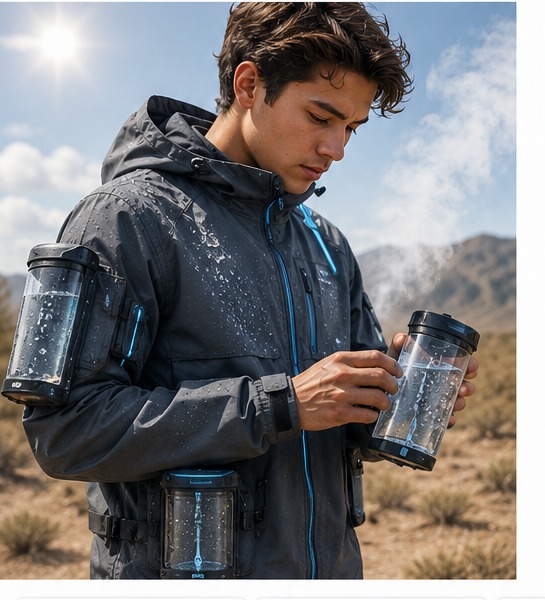
Water-Harvesting Jacket Could Transform Survival, Defense, and Disaster Response
Researchers at the University of Texas at Austin have developed a water-harvesting jacket that can pull moisture from the air and turn it into drinkable water. The wearable system produced up to 30 ounces per day during testing, showing how STEM innovation can support survival, emergency response, defense readiness, and communities with limited water access.
The Problem
Clean water is not always available in remote, dry, or disaster-impacted areas.
The Innovation
A wearable jacket captures moisture from the air and helps convert it into drinking water.
The Science
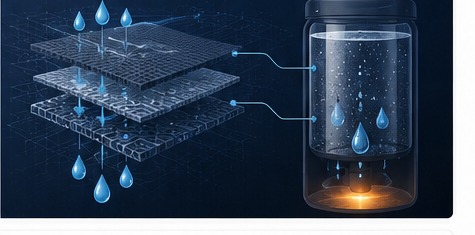
Advanced textile fibers absorb vapor, move moisture, and release it through heating and condensation.
The Impact
This could support emergency response, military readiness, outdoor work, and water-stressed communities.
Science Breakdown
This technology uses a special textile that absorbs water vapor from the air. The fabric moves that moisture through tiny fiber pathways and stores it in detachable collection units. When those units are heated, the captured moisture is released, condensed, and collected as drinkable water.
The science combines materials engineering, textile design, atmospheric water harvesting, solar heating, and condensation. Instead of carrying a large machine, the jacket turns clothing into part of the water collection system.

Integrity Futures Connection
This is the type of breakthrough Integrity Futures Network wants students to study. It connects STEM education to real-world careers in engineering, defense preparedness, environmental technology, advanced manufacturing, emergency response, climate resilience, and public safety.
Student Takeaway
Innovation is not just about inventing gadgets. It is about solving real problems. This jacket shows students how science can become a tool for survival, service, and community impact.
“Preparing students for the future means showing them the breakthroughs happening right now.”